What this stack does
Who this is for: everyone — a one-minute overview.
This project turns speech into written captions. It runs on your own computer or a private server you control — there is no paid transcription account and no cloud AI key.
Two small services do the work, and you can run either on its own:
- The speech service listens to an audio input and writes down what it hears. This is the part that does speech recognition. It needs a normal computer; a GPU is optional and only adds speed.
- The caption relay forwards caption text from the person speaking to an editor or an audience. It does not listen to speech and does not need a GPU.
A browser page ties it together: you pick a microphone, press Start, and read the captions. Everything else — an editor correcting the text, an overlay on a stream, transcripts — is built on top of those two services.
The simple picture
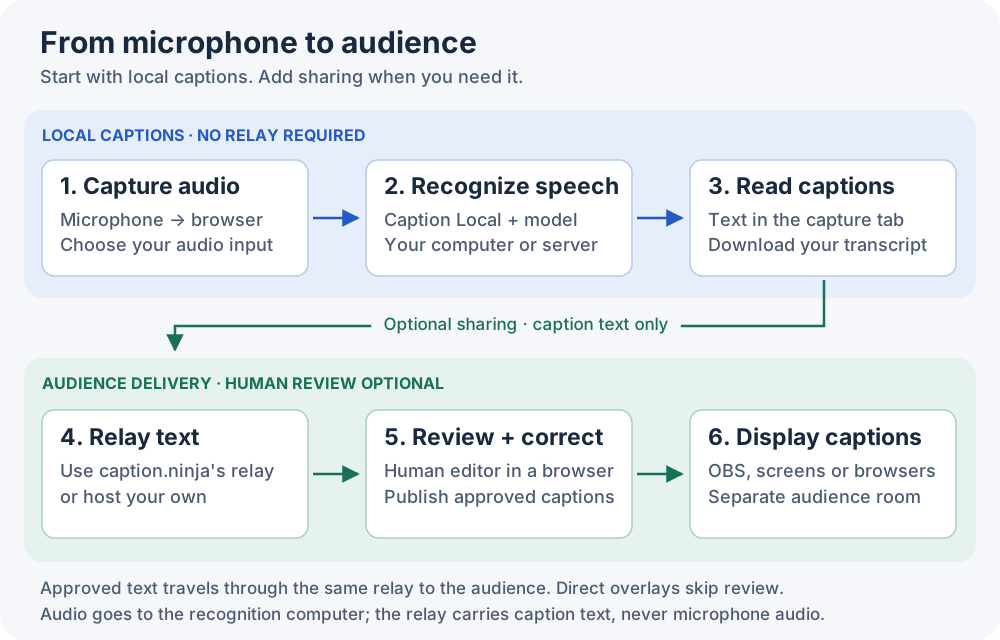
- Capture — you choose a microphone or audio input in the browser.
- Recognize — the speech service turns that audio into text, on your own machine. It can transcribe, translate into English, or both.
- Read — captions appear in the browser and can be downloaded as a transcript.
- Share (optional) — text can travel through the relay to a human editor, and on to an audience overlay or stream.
What it is not
- The speech service translates speech into English. The audience overlay can additionally show captions in many other languages, translated inside each viewer's own browser (see Translation and text-to-speech).
- It does not identify who is speaking.
- It does not magically capture other apps' audio; that audio has to reach an input the browser can use.
- It is not a public web service by default. It is built for one computer or a small group of trusted producers.
Captions are not instant
Speech is collected in short windows (six seconds by default) before it is processed, so captions arrive a few seconds behind the speaker, plus any time a human editor takes. Accuracy is good but not perfect: names, accents, noise and people talking over each other can produce mistakes. Plan for a human to review when the words matter.